
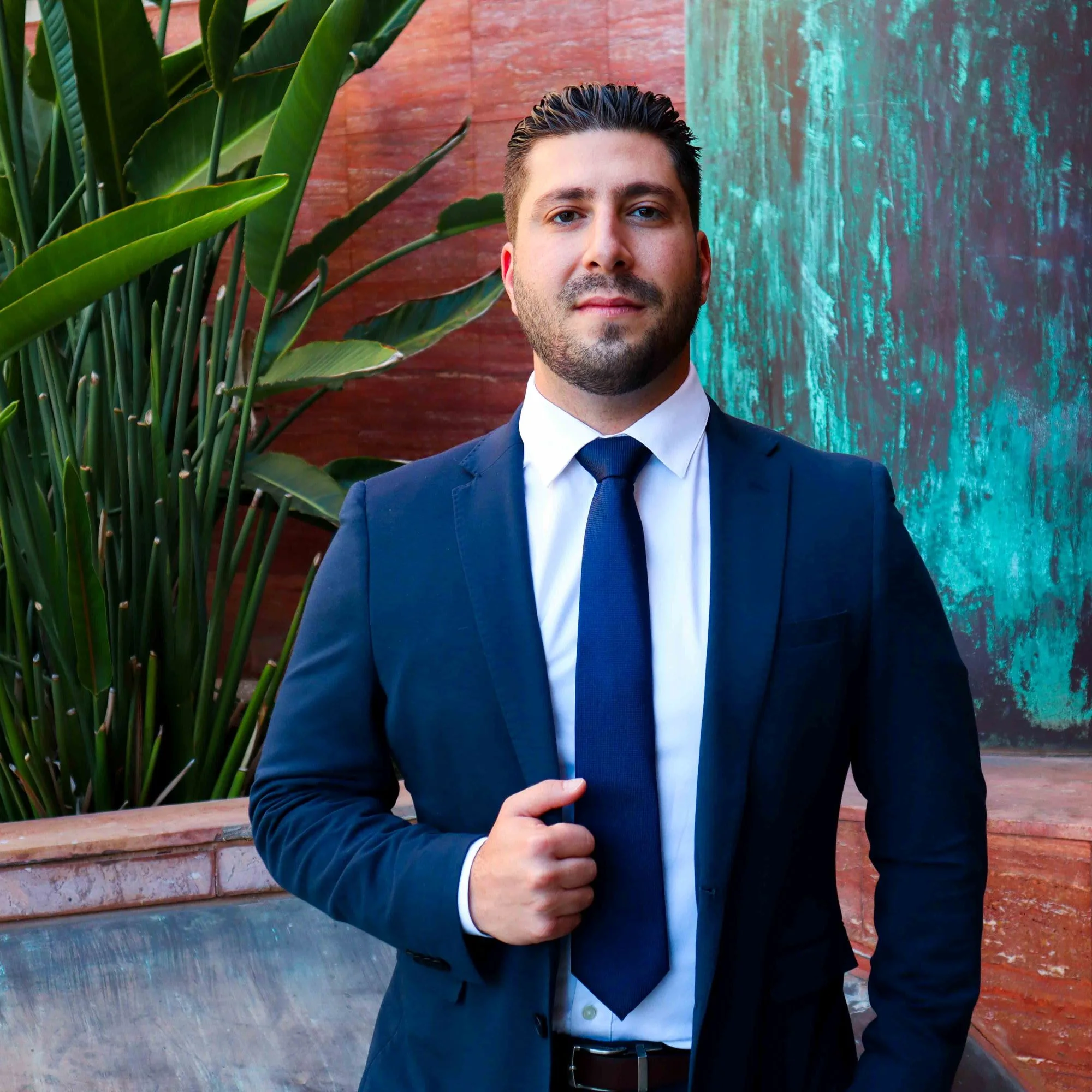
Written by Jonathan Aftalion, Esq. — Founding Attorney, Aftalion Law Group
(UCLA BA, Wisconsin JD, Witwatersrand LLM, dual CA + NY licensure, Super Lawyers Rising Stars)
In this blog, we'll explore:
Key Point
- In 2025 the administration issued a connected set of immigration executive orders covering interior enforcement and ICE, birthright citizenship, border and asylum, refugee admissions, and visa screening, plus orders on official language and a new investment pathway.
- Several of these orders and related actions are in active litigation, so their day-to-day effect can change, and nothing here replaces checking your own case.
- If you or a family member in Los Angeles could be affected, the practical move is to know your rights and get a case review before an enforcement encounter, not after.
In 2025, President Donald Trump introduced a series of executive orders that reshaped U.S. immigration policy, with major consequences for cities like Los Angeles that have long been diverse, immigrant-rich communities. This blog explains what are Trump’s executive orders for 2025 on immigration, what each one changed, which ones reach Los Angeles families most, and what you can do about it. At Aftalion Law Group, we focus on turning that uncertainty into a plan.
What are Trump’s executive orders for 2025? The immigration list
The Federal Register shows roughly 225 executive orders in 2025, numbered EO 14147 through EO 14371 (federalregister.gov/presidential-documents/executive-orders/donald-trump/2025). These are the ones that matter for immigrant families, by area.
Interior enforcement and ICE
- EO 14159, Protecting the American People Against Invasion (Jan. 20, 2025; 90 FR 8443): the core interior-enforcement order. It removes prior enforcement-priority limits, expands detention, pushes 287(g) agreements that let state and local police perform immigration functions, creates nationwide Homeland Security Task Forces, directs denial of federal funds to sanctuary jurisdictions, and directs enforcement of the longstanding alien registration requirement, the basis for the mandatory DHS registration many immigrants heard about in 2025 (whitehouse.gov/presidential-actions).
- Related DHS actions, not executive orders: on Jan. 21, 2025, DHS expanded expedited removal to the interior of the country nationwide and rescinded the “protected areas” guidance that had limited enforcement at or near schools, hospitals, and places of worship.
Birthright citizenship
- EO 14160, Protecting the Meaning and Value of American Citizenship (Jan. 20, 2025; 90 FR 8449): directs federal agencies not to recognize birthright citizenship for a child born in the United States where the mother was unlawfully present and the father was not a citizen or lawful permanent resident, or where the mother’s presence was lawful but temporary (such as a student, work, or tourist visa) and the father was not a citizen or lawful permanent resident. By its own terms it applies only to children born more than 30 days after the January 20, 2025 order, in late February 2025 onward. The order was challenged in multiple federal courts and has been blocked from taking effect, and litigation continues.
Border and asylum
- EO 14165, Securing Our Borders (Jan. 20, 2025; 90 FR 8467): restarts “Remain in Mexico,” ends the CBP One app for scheduling asylum appointments, ends the CHNV humanitarian parole program, and ends “catch and release.” A related January 20, 2025 proclamation invoked INA 212(f) to suspend entries at the southern border. That authority is broad but not unlimited: courts have held that 212(f) cannot override the INA’s statutory right to apply for asylum, and earlier attempts to suspend border asylum this way were blocked (for example, East Bay Sanctuary Covenant v. Trump). The 2025 proclamation has been the subject of legal challenges.
Refugee and screening
- EO 14163, Realigning the United States Refugee Admissions Program (Jan. 20, 2025; 90 FR 8459): suspends refugee admissions until further notice.
- EO 14161, Protecting the United States From Foreign Terrorists and Other National Security and Public Safety Threats (Jan. 20, 2025; 90 FR 8451): orders expanded vetting and a report identifying countries with inadequate screening, which set the stage for later travel restrictions on certain countries.
Other 2025 orders that reach Los Angeles
- EO 14224, Designating English as the Official Language of the United States (Mar. 1, 2025; 90 FR 11363): makes English the official language and rolls back prior language-access requirements, which can reduce multilingual services.
- EO 14351, The Gold Card (Sept. 19, 2025; 90 FR 46031): routes applicants through existing EB-1 and EB-2 National Interest Waiver visa categories, using a large financial gift to the U.S. government as evidence of national benefit, rather than creating a new visa category, since only Congress can do that. Reporting describes tiers of a $1 million gift for an individual or $2 million for a corporate-sponsored applicant, paid to the Department of Commerce and filed on Form I-140G through USCIS. The figures and process were still being implemented, so confirm current numbers before relying on them (whitehouse.gov/presidential-actions; federalregister.gov, 90 FR 46031).
- Venezuela TPS terminations. The 2023 Venezuela Temporary Protected Status designation’s termination took effect October 3, 2025, and the 2021 designation was terminated effective November 7, 2025 (90 FR 43225). A narrow group keeps protection: people whose EAD was issued on or before February 5, 2025 and bears an October 2, 2026 expiration date retain work authorization through October 2, 2026 (USCIS, I-9 Central). If you are a Venezuelan TPS holder, confirm your EAD’s issue and expiration dates before assuming you are covered.
So when people ask what are Trump’s executive orders for 2025 on immigration, the honest answer is that it was not one order but a connected set, plus proclamations and agency actions, issued mostly in the first weeks and expanded through the year.
Which 2025 orders affect immigrants in Los Angeles most?
Los Angeles has one of the largest immigrant populations in the country, so several of these land hard here.
Challenges to birthright citizenship. If the order were ever to take effect, some children could be left without clear documentation, creating legal uncertainty for Los Angeles families around identification and access to services.
Effects of mandatory registration. The registration push may discourage people from seeking healthcare, education, or legal help, which sits in tension with Los Angeles’s sanctuary-city approach to community trust.
Interior enforcement in a sanctuary jurisdiction. EO 14159’s 287(g) expansion, task forces, and sanctuary-funding provisions directly target California’s limited-cooperation policies, and the expedited-removal and sensitive-locations changes reach people far from the border, at work, at clinics, and near schools and churches.
Language access. Designating English as the official language may reduce multilingual public services that many Los Angeles residents rely on.
Housing pressure. The Gold Card pathway could draw high-wealth applicants, adding pressure to an already strained housing market.
How have the orders changed ICE enforcement in Latino communities?
Research tracking 2025 enforcement, including analysis from UCLA’s Luskin Center, reported a sharp rise in average daily ICE arrests of Latino individuals compared with prior levels, alongside expanded staffing and interior operations (knowledge.luskin.ucla.edu). In Los Angeles, that shift is felt at workplaces and in neighborhoods, not only at the border.
Workplace and home enforcement. With protected-area limits gone and expedited removal expanded, there is more activity at worksites and near homes, schools, and clinics. The most useful thing a family can learn in advance is the difference between an administrative ICE warrant and a judicial warrant signed by a judge.
Your rights during an ICE encounter. These apply regardless of status. You have the right to remain silent and to say you want to speak to a lawyer. You do not have to open your door unless agents show a judicial warrant signed by a judge, with your correct name and address. You do not have to sign anything you do not understand, and you can ask whether you are free to leave. For more on who is exposed and how, see Will Trump Deport Legal Immigrants: Understanding Deportation Risks in Los Angeles and New York.
Have courts blocked any of the 2025 orders?
Several 2025 immigration actions, most prominently the birthright-citizenship order, were challenged in federal court almost immediately, and litigation is ongoing. Because injunctions, appeals, and higher-court rulings can change what is enforceable over time, the status of any single order can shift, and early headlines go stale fast. We verify the current posture of each order before advising a client rather than relying on a news summary. For how the broader enforcement picture has shifted, see Trump Deportation Plan 2025-2026: What Changed.
What should you do if you or a family member could be affected?
If you have a pending case. Keep every notice, attend every hearing, and update your address with the court and USCIS. Missing a hearing can turn a pending case into a removal order.
If you are undocumented. Make a family plan now: memorize an attorney’s number, decide who cares for children if a parent is detained, and keep key documents in one place. Do not sign anything without counsel.
If you are a green card or visa holder. Do not assume status makes you untouchable. Review any past contact with law enforcement before you travel, since old issues can surface at the border.
Protect Your Los Angeles Family Before a 2025 Order Becomes an Emergency
President Trump’s 2025 immigration executive orders represent a major shift, and the Los Angeles families who do best plan before an encounter, not during one. Aftalion Law Group can review your specific situation, explain which orders reach you, and build a response that fits your status and your household. Start with our Removal Defense practice, schedule a confidential case review at no cost, or call (424) 270-6767 today.
Frequently Asked Questions
How many executive orders did Trump sign in 2025?
About 225, numbered EO 14147 through EO 14371 in the Federal Register. A large share addressed immigration and enforcement.
Did Trump end birthright citizenship in 2025?
He signed an order directing agencies to stop recognizing it for certain children born in late February 2025 or later. It was challenged in multiple federal courts and blocked from taking effect, and the issue remains contested.
Do undocumented immigrants have to register with DHS?
The 2025 enforcement order directs DHS to enforce the existing alien registration requirement, and failing to register can carry fines or removal consequences. Talk to a lawyer before registering, since it involves disclosing your presence.
Can ICE go to schools, hospitals, or churches now?
DHS rescinded the prior “protected areas” policy, so those places are no longer categorically off-limits. ICE still generally needs a judicial warrant signed by a judge to enter your home without consent.
Is Venezuela TPS still valid in 2026?
The designations have been terminated, but if your EAD was issued on or before February 5, 2025 and expires October 2, 2026, your work authorization is recognized through that date. Check your specific documents with a lawyer.
Recent Blogs




Categories
Essential Ideas
- Investment-based green card
- Pathway to U.S. permanent residency
- Job creation is required
- Family included in application
- Legal guidance reduces risk