

Defensive asylum is how you apply for asylum when you are already in removal (deportation) proceedings. Instead of applying affirmatively to USCIS, you file Form I-589 with the immigration court and present your case to an immigration judge as a defense against deportation. If you are in proceedings and fear returning to your country, this guide explains how the process works, what to expect at each hearing, and what happens if you win or lose. At Aftalion Law Group, we represent asylum seekers in immigration courts nationwide from our offices in Los Angeles and New York.

Written by Jonathan Aftalion, Esq. — Founding Attorney, Aftalion Law Group
(UCLA BA, Wisconsin JD, Witwatersrand LLM, dual CA + NY licensure, Super Lawyers Rising Stars)
Key Point:
- Defensive asylum is filed with the immigration court using Form I-589 as a defense against deportation when you are already in removal proceedings, not with USCIS.
- Since October 1, 2024, an Annual Asylum Fee (AAF) applies once your Form I-589 has been pending for more than one year, and recurs every year the case stays pending. For FY2026 the fee is $102 per application. It cannot be waived, and it is due within 30 days of the USCIS notice.
- Your case is decided at an individual (merits) hearing before an immigration judge. Outcomes are asylum granted, alternative relief (withholding of removal or CAT), or a removal order you can appeal to the BIA within 30 days.
What Is Defensive Asylum?
Defensive asylum is an asylum claim raised as a defense against removal. You use it when you are already in immigration court facing deportation, typically after an arrest by immigration authorities or after being placed in proceedings. To qualify, you must show a well-founded fear of persecution in your home country based on one of five protected grounds: race, religion, nationality, political opinion, or membership in a particular social group.
The key difference from affirmative asylum is your starting point. Affirmative applicants are not in proceedings and apply to USCIS. Defensive applicants are in proceedings and apply to the court, which makes it a core part of any removal defense strategy.
How Does the Defensive Asylum Process Work?
The process begins once you are in removal proceedings and runs through the immigration court.
- Proceedings begin. You are placed in removal proceedings, usually after an arrest or the issuance of a Notice to Appear.
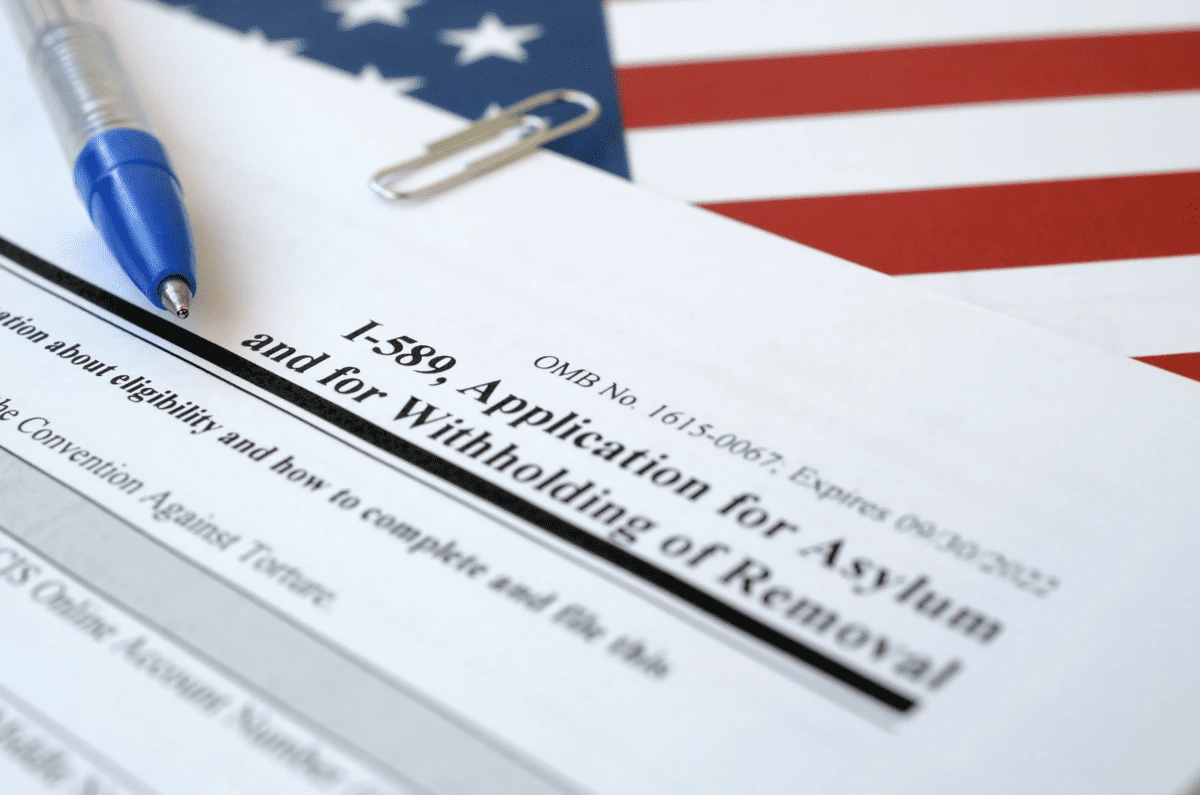
- You file Form I-589. The Application for Asylum and for Withholding of Removal is filed with the immigration court handling your case. Filing on time matters, and missing deadlines can cost you.
- Annual Asylum Fee applies. If your Form I-589 stays pending for more than one year, an Annual Asylum Fee (AAF) becomes due, and recurs each year the case remains pending. For FY2026 the fee is $102 per application (one payment covers the whole I-589, including any dependents listed on it). It cannot be waived. You must pay within 30 days of the USCIS notice, through your USCIS online account or the immigration court payment system. Missing the deadline can lead to your case being dismissed and the loss of your work authorization. See Form G-1055 for the current fee.
- Hearings are scheduled. The judge sets a master calendar hearing first, then a separate individual (merits) hearing where your full case is heard.
Where Do I File My Defensive Asylum Application?
You file Form I-589 with the specific immigration court assigned to your case, not with USCIS. The hearing notice you received from the court identifies which court that is. Always keep copies of everything you file and proof of filing.
What Happens at the Master Calendar Hearing?
The master calendar hearing (MCH) is a short preliminary hearing, not the trial. At the MCH the judge confirms your identity and your asylum claim, has you address any missing information on your application, and sets deadlines for additional evidence and filings, along with the date of your individual hearing.
If you do not yet have a lawyer, this is the moment to get one. An attorney can meet the court’s deadlines, organize your evidence, and speak for you before the judge.
How Do I Prepare for the Individual Hearing?
The individual hearing is where your case is won or lost. This is where you present your full claim, evidence, and testimony to prove you qualify for asylum. Strong preparation includes:
- A detailed personal statement describing what you experienced and why you cannot safely return.
- Supporting documents such as medical records, police reports, and sworn affidavits that corroborate your fear of persecution.
- Country condition reports documenting the dangers people like you face in your home country.
- Knowledgeable witnesses, where possible, who can speak to conditions in your country or to your situation.
Expect cross-examination by a government attorney who may challenge your account. Answer honestly and directly, and keep your testimony consistent with your written evidence, because credibility is often decisive. Remember that you hold constitutional protections throughout this process; our guide on whether undocumented immigrants have constitutional rights explains what those are.
What Are the Possible Outcomes?
After the individual hearing, the judge can reach one of three results:
- Asylum granted. If the judge finds you meet the refugee definition, you receive asylum, gain protection from removal, can work, and may apply for a green card one year later, often through a family-based immigration path.
- Alternative relief granted. If you do not qualify for asylum but meet the standard for withholding of removal or protection under the Convention Against Torture (CAT), you may still be protected from deportation.
- Denied and ordered removed. If the judge finds you do not meet the standard, the claim is denied and a removal order may be entered, though you can appeal.
How Do I Appeal a Denied Asylum Case?
If your claim is denied, you can appeal to the Board of Immigration Appeals (BIA). The appeal involves filing a Notice of Appeal within 30 days of the judge’s decision, submitting a written brief identifying the legal errors in that decision, and requesting oral argument if warranted. If the BIA upholds the denial, you may petition the federal court of appeals for review.
What If Asylum Is Denied? Other Ways to Stay
A denial does not always mean the end of your options. Depending on your situation, you may be able to pursue prosecutorial discretion, where the government agrees not to pursue removal, or another immigration benefit such as a U visa (for certain crime victims) or a T visa (for trafficking victims). Survivors of abuse may also qualify for protection through a VAWA self-petition. In some cases, voluntary departure may be preferable to a formal removal order because it avoids some future immigration bars. An attorney can tell you which, if any, applies to you.
Why Legal Representation Is Critical
Asylum outcomes improve dramatically with counsel. Represented asylum seekers succeed at far higher rates than unrepresented ones, because the process is technical and the stakes are permanent. A lawyer makes sure your I-589 and evidence are complete and filed on time, prepares you for direct testimony and cross-examination, argues your case before the judge, and pursues appeals or alternative relief if you are denied. Learn more on our asylum practice page, or read about our firm and the attorneys who would handle your case.
What We Are Seeing in Current Cases
By Jonathan Aftalion, Esq., Founding Attorney, Aftalion Law Group (UCLA BA, Wisconsin JD, Witwatersrand LLM, licensed in California and New York, Super Lawyers Rising Stars).
Defensive asylum has gotten harder, not because the law changed but because the environment did. In the cases we handle now, timelines are tighter, judges are more skeptical, and a thin filing gets tested immediately at the individual hearing. The clients who do best are the ones who treated the master calendar hearing as the start of serious preparation, not a formality, and who built a documented, corroborated record rather than relying on testimony alone. If you are in removal proceedings, the worst thing you can do is wait. Reach our team through our asylum page or call (424) 270-6767.
Get Help With Your Defensive Asylum Case
Defensive asylum is complex, and the outcome shapes your future. Whether you are in proceedings in California, New York, or anywhere in the country, Aftalion Law Group provides dedicated representation for asylum seekers. Contact us or call (424) 270-6767 for a confidential case evaluation. Hablamos español.
Frequently Asked Questions
What is the difference between defensive and affirmative asylum?
Affirmative asylum is filed with USCIS by someone not in removal proceedings. Defensive asylum is filed with the immigration court by someone who is in proceedings as a defense against deportation.
Can I apply for asylum more than one year after entering the U.S.?
There is a one-year filing deadline, but exceptions exist for changed country conditions or extraordinary circumstances that prevented a timely filing. These exceptions are interpreted strictly, so consult an attorney promptly.
Is there a fee for a pending asylum case?
Yes. Since October 1, 2024, an Annual Asylum Fee applies once your Form I-589 has been pending for more than one year, and it recurs annually. For FY2026 the fee is $102 per application, it cannot be waived, and it is due within 30 days of the USCIS notice. Missing that deadline can result in your case being dismissed and losing your work permit. See Form G-1055 for the current amount.
What happens if my defensive asylum claim is denied?
You can appeal to the Board of Immigration Appeals within 30 days and potentially to a federal court of appeals. You may also qualify for alternative relief such as withholding of removal or CAT protection.
Do I need a lawyer for defensive asylum?
It is not legally required but strongly advised. Represented applicants have significantly higher success rates, and the government will not provide an attorney for you in immigration court.
Can I work while my asylum case is pending?
You may apply for a work permit (EAD) once your application has been pending for the required waiting period. Note that if your case stays pending with USCIS for a year or more, the Annual Asylum Fee applies ($102 for FY2026) and recurs annually until your case is decided. Processing times and fees change, so confirm current figures with USCIS or your attorney.
Trusted Resources:
- USCIS, Annual Asylum Fee: https://my.uscis.gov/accounts/annual-asylum-fee/start/overview
- USCIS, Form G-1055 (fee schedule): https://www.uscis.gov/g-1055
- USCIS, Form I-589, Application for Asylum and for Withholding of Removal: https://www.uscis.gov/i-589
- Executive Office for Immigration Review (immigration courts): https://www.justice.gov/eoir
- Board of Immigration Appeals: https://www.justice.gov/eoir/board-of-immigration-appeals
Recent Blogs




Categories
Essential Ideas
- Defensive asylum is filed during removal proceedings
- Applicants must present their case before an immigration judge
- Strong evidence and testimony are critical to success
- Outcomes include asylum approval, relief, or removal orders
- Legal representation significantly improves case outcomes